
Jesus Sees, Stops and Loves — Do We?
By Tom Stolle
Imagine being lost. Imagine not knowing Jesus. Imagine a life in chaos.
Now imagine someone inviting that person to church. Imagine that person desperately wanting to come — but they have a child with a developmental or intellectual disability. Imagine you telling them, “Please come. You are welcome here.” And imagine that person telling you they’re afraid to come, because they’re worried their child won’t be welcomed.
To someone who attends church each week — experiencing fellowship, being blessed by worship and preaching, enjoying relationships, and feeling loved — this may sound hard to believe. But in the world of disability, it is a very real concern.
Consider what the research tells us. A 2020 Lifeway Research study found that 99% of pastors and 97% of churchgoers said individuals with a disability would feel welcomed and included at their church. Yet another Lifeway study revealed that the majority of the estimated 25 million adults with mental illness in this country believe the church will not welcome them. A study conducted by the University of Kentucky and Vanderbilt University found that only 43% of more than 400 parents of children with disabilities surveyed said their church was supportive — and nearly one in three families had changed churches because they felt their child was not welcomed or included. Other ministry sources estimate that only 15–20% of churches have a disability ministry.
There appears to be a large disconnect. Why?
If you ask individuals and families affected by disability why they don’t feel welcome, you’ll hear a range of answers: buildings that aren’t accessible, noise and lights that create sensory overload, exclusion from serving, isolation, the assumption that they need healing, or being treated as a ministry opportunity instead of a person.
I believe part of the disconnect is this: the church sees itself as kind — and it often is. But inclusion involves more than kindness.
Individuals and families affected by disability are seeking accessibility, inclusion, and the assurance that they truly belong as part of the church family. While most churches (though not all) have physical accommodations such as ramps and accessible parking, far fewer have an intentional disability ministry — with inclusive offerings like adapted Bible studies, respite care, or other specialized support.
I believe the heart of God toward individuals with disabilities is revealed in the life of Jesus. Did you know that of the miracles recorded in the Gospels, roughly two out of three involve disability? What a powerful reminder for the church.
Matthew 20:29–34 (NLT) says: “As Jesus and the disciples left the town of Jericho, a large crowd followed behind. Two blind men were sitting beside the road. When they heard that Jesus was coming that way, they began shouting, ‘Lord, Son of David, have mercy on us!’
“‘Be quiet!’ the crowd yelled at them.
“But they only shouted louder, ‘Lord, Son of David, have mercy on us!’
“When Jesus heard them, he stopped and called, ‘What do you want me to do for you?’
“‘Lord,’ they said, ‘we want to see!’ Jesus felt sorry for them and touched their eyes. Instantly, they could see! Then they followed him.”
I love that Jesus never viewed individuals affected by disability as interruptions.
He saw them. He stopped for them. He loved them. So many individuals and families today long for the church to do the same — to see them, stop for them, and love them.
Here’s the good news: your church doesn’t have to figure this out alone.
If your church is ready to move from welcoming in word to welcoming in practice, the Baptist Convention of Maryland/Delaware Compassion Ministries team would love to help. Reach out to us at [email protected], and we will connect you with a consultant who can walk alongside your church — whether your next step is an accessibility assessment, training your volunteers, or launching adapted ministries. Together, we can help your church become a place where every individual and every family knows, without a doubt, that they belong.
Be a church that doesn’t just say “you are welcome,” but truly lives it.
May God bless your church as you welcome and include these wonderful individuals and their families.
Tom Stolle serves as Executive Director of the Baptist Convention of Maryland/Delaware
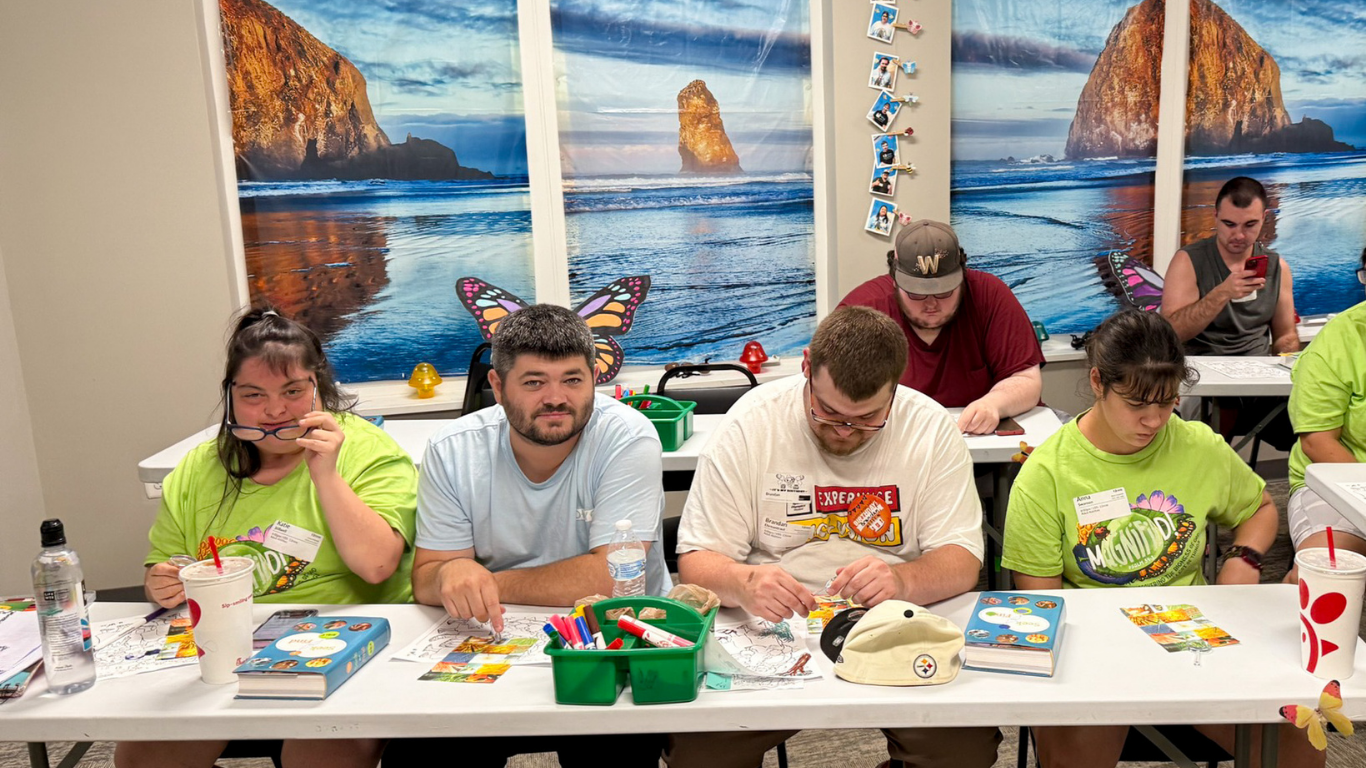
Photo courtesy of Bayside Baptist Church’s Abilities Ministry