
Compassion Ministry Ideas Your Church Can Use Now
By Mark Dooley
“Truly, I say to you, as you did it to one of the least of these my brothers, you did it to me.”
— Matthew 25:40
We all know this verse—but what does it mean to serve “the least of these,” what we often call compassion ministry? What does it look like in real life? Below are some examples to help you prayerfully think through how your church can meet the specific needs of your community. This short list highlights churches that are being the hands and feet of Jesus, showing genuine love and compassion, and seeking to meet the physical and spiritual needs of individuals and families.
Meeting practical needs through a thrift ministry:
SonRise Church (Eastern Baptist Association) operates Open Hand Thrift, a thrift store offering “like new” donated items. Through this ministry, they became aware of a Hispanic pastor and their family who were in need of furniture and household appliances. Open Hand Thrift was able to help meet those needs.
Supporting families through adoption:
Redemption City Church (Baltimore Baptist Association) created an Adoption Fund to support families pursuing adoption. Their annual Adoption Cup golf tournament raised $11,000 in its first year and more than $14,500 the following year, directly helping families welcome children into loving homes.
Supporting expecting moms and Christian pregnancy centers:
Bethel Baptist Church (Mid-Maryland Baptist Association) supports Alpha Pregnancy Center through a senior adult–led baby shower and an annual baby bottle campaign, raising about $3,500 each year to serve women and families facing unplanned pregnancies.
Clothing children and feeding families:
Mountain City Church (Western Baptist Association) tells their community, “Never buy clothes for your child again.” Each month, families receive one bag of clothing per child, along with a meal, prayer, and personal care.
Using clothing closets to build gospel conversations:
Conowingo Baptist Church (Susquehanna Baptist Association) opens their clothing closet twice a month and by appointment. As guests “shop,” volunteers build relationships and share the hope of Jesus.
Creating a safe place for healing:
New Beginnings Christian Fellowship (Susquehanna Baptist Association) opens their doors weekly to the community for Bible teaching and support, helping people discover that the church can be a safe place for healing, freedom, and growth.
Serving vulnerable new moms and their children:
First Baptist Church of Mt. Ranier (Prince George’s Baptist Association) has partnered with Nana’s House, a nonprofit that lovingly provides diapers, wipes, clothing, formula, and other essentials—along with the love of Jesus—to vulnerable mothers and their children on a monthly and quarterly basis.
Serving families through a blessing boutique:
Lake Shore Baptist Church (Arundel Baptist Association) operates a monthly Blessing Boutique, serving 25–35 families with free clothing. To date, they have helped 415 families and more than 1,000 children.
Combining food, clothing, and the Word:
Glen Burnie Baptist Church (Arundel Baptist Association) operates a clothing closet and food pantry twice a month. Each gathering begins with a 30-minute Bible study attended by about 50 people, and several individuals have come to faith through the ministry.
Loving the vulnerable:
The Church in Station North (Baltimore and Mid-Maryland Association) serves Baltimore’s homeless population weekly with meals, supplies, prayer, and gospel witness. They also collect blankets, sleeping bags, tents, socks, and other items to serve those experiencing homelessness or in need. Recently, the church helped a victim of domestic violence escape danger and find housing, leading to healing and baptism.
Transforming lives:
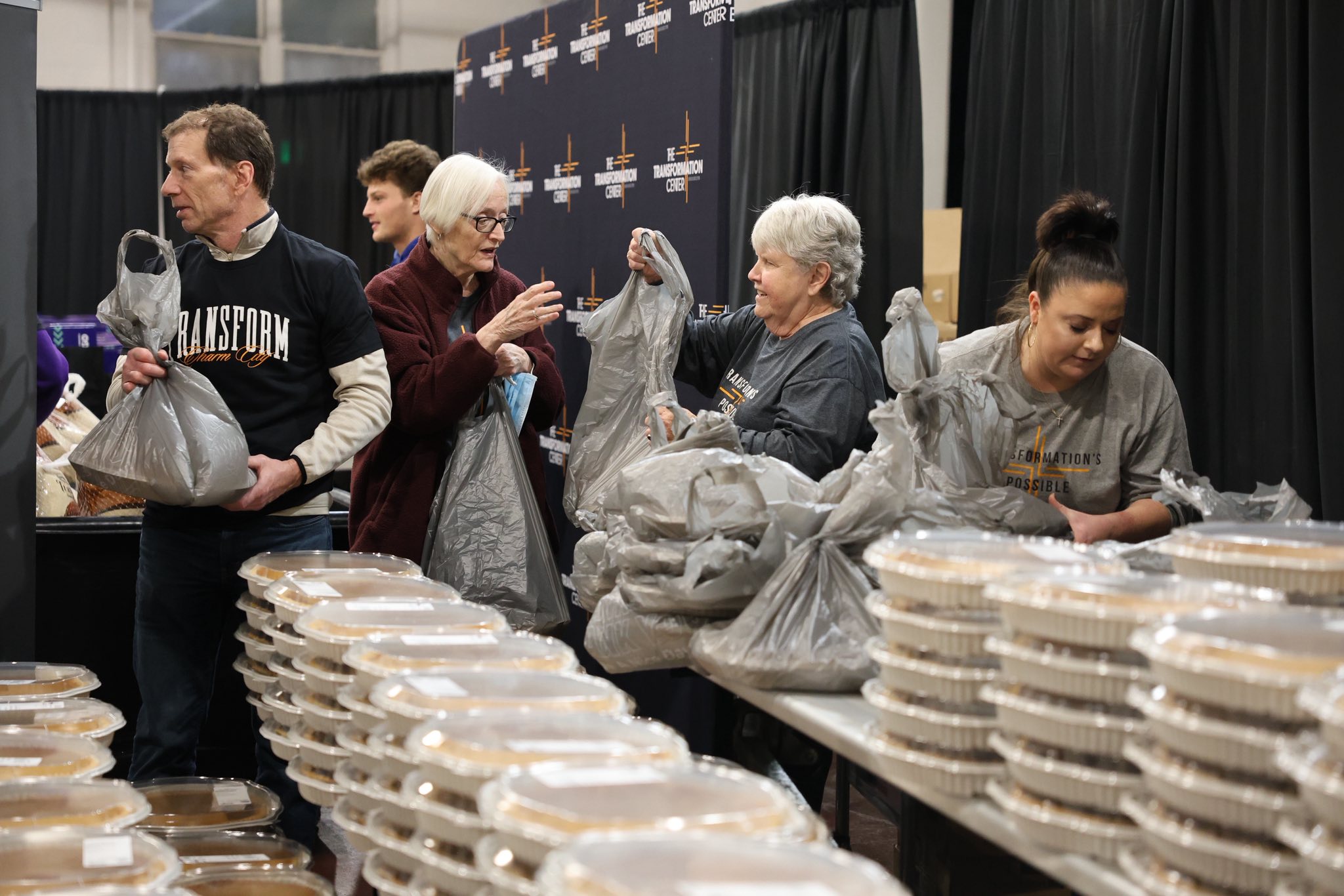
The Transformation Center in Curtis Bay (Baltimore Association) is a beacon of hope for many south of Baltimore. Just a few of their programs include weekly clothing and food distribution to help families stretch their income; after-school programs for kids; showers, haircuts, and more for people experiencing homelessness; health assistance; and regular large distributions at Christmas, Thanksgiving, and Easter.
These stories are not unique or exhaustive. They represent the myriad of compassion ministries BCM/D churches engage in each week. Through these ministries, BCM/D churches are caring for hurting individuals, exhibiting the love of Jesus and sharing the hope of the gospel.
If your church has a similar ministry, we’d love to hear about it. And if you’re reading this and want to start or strengthen a compassion ministry, let us help you take the first step.
So how do you start—or how can you strengthen—your compassion ministry?
As we move through 2026, consider:
- How might God be calling your church to serve?
• Who in your community is hurting?
• What simple step could you take next?
If you’d like coaching, ideas, or encouragement, or have any questions, please email me at [email protected] or Church Planter and Prayer Leader Richard Pope at [email protected]. You can also visit our website.
We would love to walk with you as you serve Jesus by serving “the least of these.”
Mark Dooley serves as associate executive director/director of missional impact.
Feature Photo: Volunteers at The Transformation Center work together to prepare food distribution. (Photo courtesy of The Transformation Center)