
Six Historical Facts About George Liele Every Church Should Know
By Sharon Mager
We hear about George Liele every year, especially in Maryland/Delaware. In addition to the Southern Baptist Convention’s George Liele Church Planting, Evangelism, and Missions Sunday (February 1), the African American Fellowship of the BCM/D hosts a George Liele Missions Breakfast (Feb. 21) and has a growing George Liele Leadership Institute. But who is this celebrated man? Read the six facts below to learn more and understand why we honor George Liele’s legacy and his obedience to the call of God.
- George Liele was born into slavery and came to faith at a Baptist church.
George Liele was born enslaved in Virginia. Through his owner, Henry Sharp, a deacon at a Baptist church, Liele heard the gospel and came to faith in Jesus Christ. In the limited available writings by Liele, he says, “At the age of about twenty-five, I was baptized upon a profession of my faith in Christ Jesus.”¹ - While still enslaved, Liele was licensed and ordained as a Baptist preacher.
Even before gaining his freedom, Liele began preaching to other enslaved people and was formally licensed and ordained by Baptist leaders—an extraordinary recognition in the 18th century. He worked during the day, as did other enslaved people, and after hours of labor, they gathered to pray, sing and hear the gospel proclaimed by Liele.² - Henry Sharp later granted Liele his freedom, enabling his ministry to expand.
Liele’s owner, Henry Sharp, eventually granted Liele freedom. As a free man, Liele continued preaching and was able to pursue his calling more as a recognized Baptist minister.³ - Liele founded the congregation that became First African Baptist Church in Savannah.
In 1777, Liele founded a Black Baptist congregation in Savannah, Georgia. That church continues today as First African Baptist Church, making it one of the oldest continuously active Black Baptist congregations in the United States. Many visit the church and take tours to hear Liele’s story. The church later served as a stop on the Underground Railroad. Visitors can still see the breathing holes in the floor of the church’s lower level, where enslaved people hid while awaiting transport to freedom.⁴ - After Sharp’s death, Liele protected his freedom and carried the gospel to Jamaica.
Following Henry Sharp’s death, Sharp’s heirs attempted to reclaim Liele as enslaved property. To secure his freedom, Liele entered into an indentured agreement with a British officer and later traveled to Jamaica. There, he continued preaching and organizing Baptist congregations despite opposition and periods of imprisonment by colonial authorities. Liele’s wife, Hannah, accompanied him and shared in the hardships of missionary life, though very little is known about her.⁵ - The African American Fellowship of Maryland/Delaware helped bring national awareness to George Liele’s legacy.
The African American Fellowship of Maryland/Delaware played a key role in bringing national attention to Liele’s life and ministry. Robert Anderson Jr., retired pastor of Colonial Baptist Church in Randallstown, Md., after researching Liele’s life, declared, “He should be in the Christian Hall of Fame!” Anderson made a successful motion at the 2019 SBC Annual Meeting in Birmingham to add George Liele Sunday to the SBC calendar. That action led to the SBC’s annual Church Planting, Evangelism, and Missions Day, observed on the first Sunday of February.⁶
Sources
¹ George Liele, autobiographical account, The Baptist Annual Register, ed. John Rippon (London, 1790s); James Leo Garrett Jr., Baptists in America (Macon, Ga.: Mercer University Press).
² The Baptist Annual Register, John Rippon; Sylvia R. Frey and Betty Wood, Come Shouting to Zion: African American Protestantism in the American South and British Caribbean (Chapel Hill, N.C.: University of North Carolina Press).
³ George Liele, autobiographical account, The Baptist Annual Register; E. Brooks Holifield, History of Baptists in the Southern United States.
⁴ First African Baptist Church (Savannah) historical records; Baptist Convention historical archives; Albert J. Raboteau, Slave Religion: The “Invisible Institution” in the Antebellum South.
⁵ George Liele, autobiographical account, The Baptist Annual Register; Frey and Wood, Come Shouting to Zion; W. Reginald Ward, Early Evangelicalism: A Global Intellectual History.
⁶ Southern Baptist Convention Annual Meeting records (2019); African American Fellowship of Maryland/Delaware historical materials.
Visit the IMB website to learn more and get George Liele Missions Sunday materials.
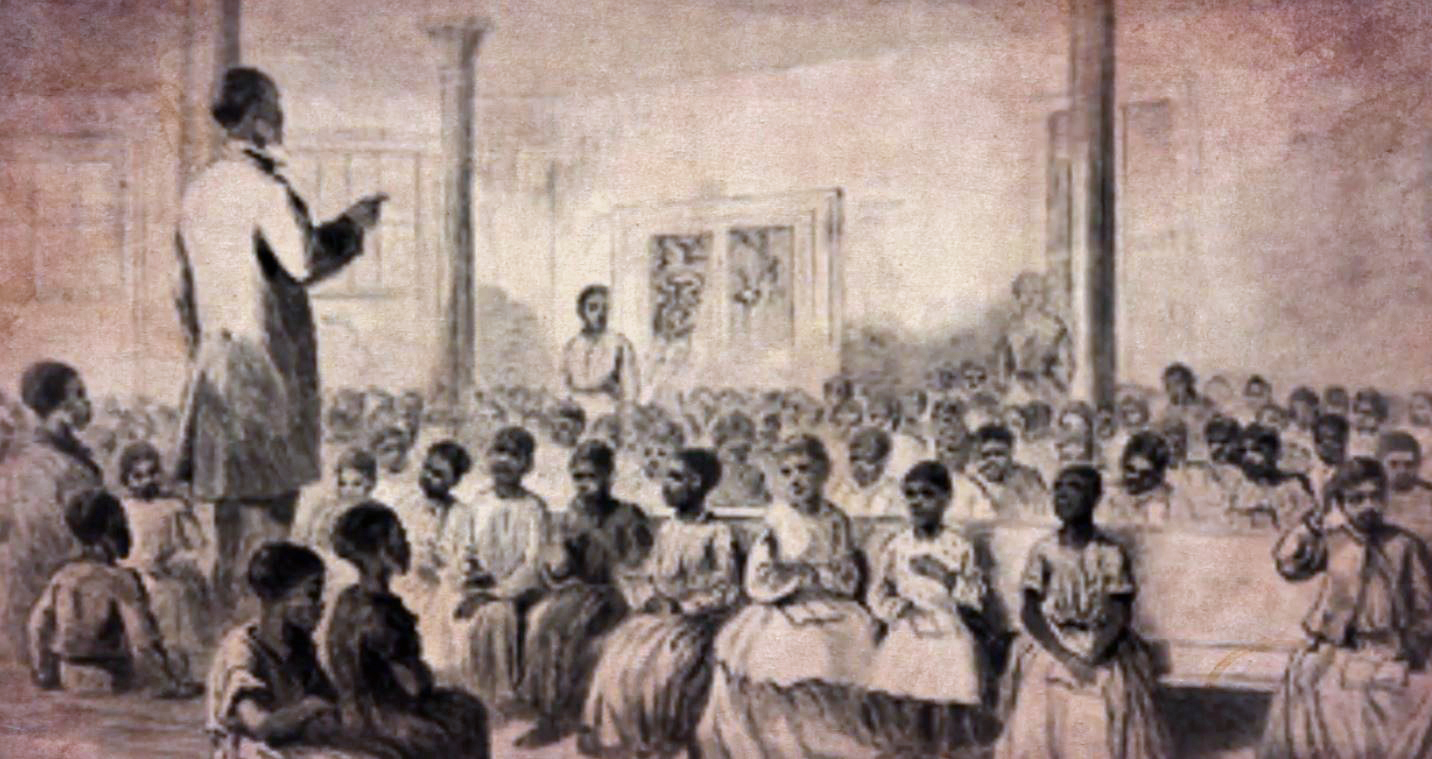
Feature Photo: Source: 19th-century historical illustration (artist unknown)
Sharon Mager serves as BCM/D stories and content editor.