
CP reaches Blue Zone status
By: Mark Dooley
Those who watch football know what the “Red Zone” is: when a team’s offense has possession of the ball inside their opponent’s 20-yard line. But do you know what the “Blue Zone” is? (Hint: it has nothing to do with football!)
A blue zone is an area of the world where people tend to live longer, often beyond 100 years old. American author Dan Buettner and Belgian demographer Michel Poulain have worked together to identify four blue zone regions in the world: Sardinia (Italy), Okinawa (Japan), the Nicoya Peninsula (Costa Rica), and Icaria (Greece). Three other areas are often mentioned in this discussion, although not mutually recognized by Buettner and Poulain: Martinique (French Caribbean), Loma Linda (California), and Singapore.
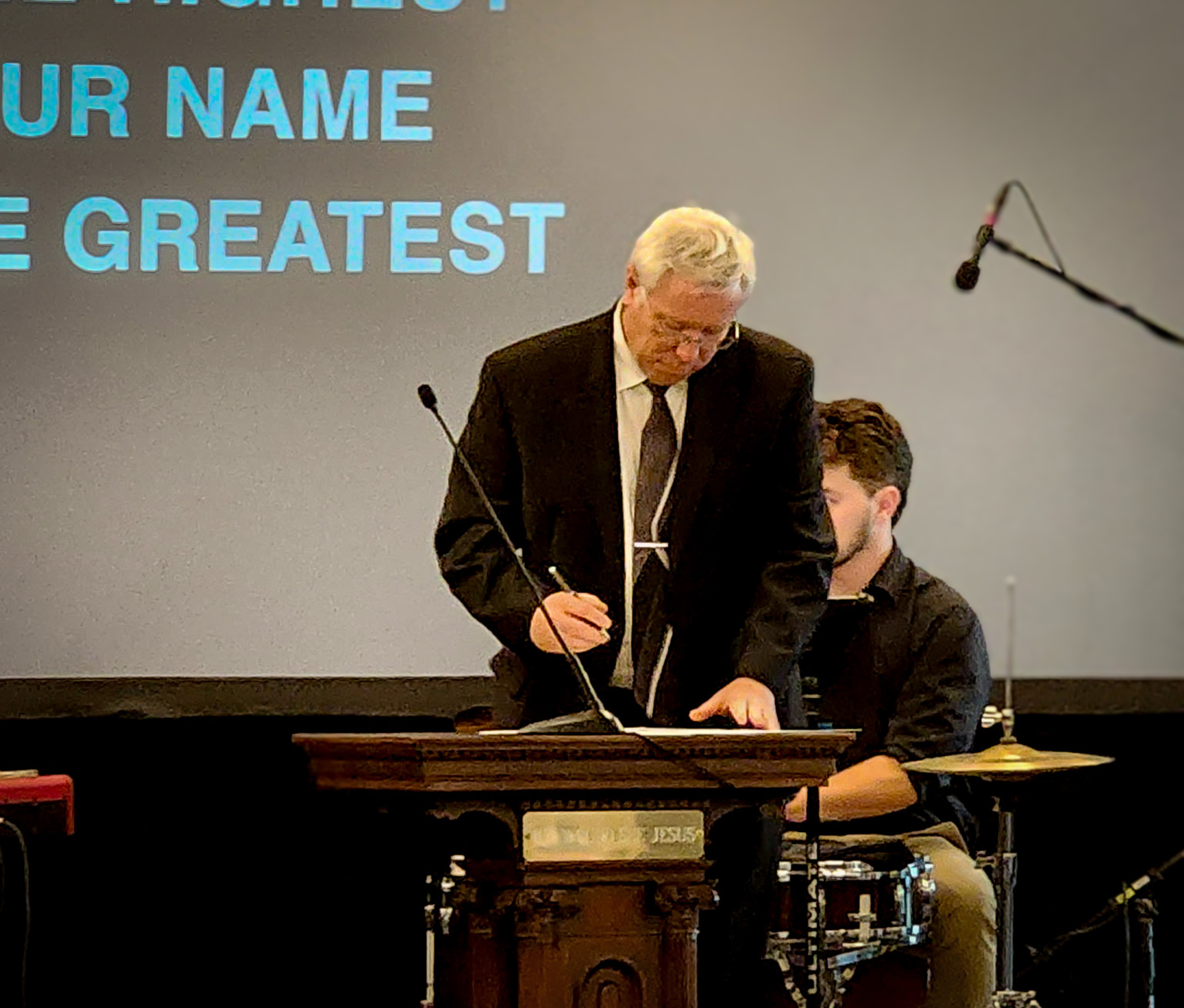
In 2025, the Southern Baptist Convention’s Cooperative Program (CP) reached blue zone status. On May 13, 1925, in Memphis, TN, the SBC officially adopted the Cooperative Program as its unified plan of funding worldwide missions. For the past 100 years, it has enabled and empowered Southern Baptists to do just that. On May 13, I was privileged to join Tom Stolle, BCM/D Executive Director, and Fred Caudle, BCM/D President, in Memphis, to celebrate the 100th anniversary of CP and sign a resolution affirming our ongoing support of this important mechanism for missions impact.
What has made CP so impactful?
- It respects the autonomy of the local church
No church is told what to contribute to CP to be part of the SBC. Instead, each church, as an autonomous entity, makes its own determination about the level at which it will participate. This has led many churches in the SBC to adopt a generous and sacrificial posture toward supporting missions. - It taps into the power of togetherness
Working together, SBC churches have been able to accomplish far more than any single church can do alone and participate in ministries that would have otherwise been difficult for them. The rural church in Western Maryland can have a direct connection to international missions through CP support of the International Mission Board. The inner-city church in Baltimore can assist its pastor in receiving his theological education through the CP’s support of our six seminaries. The church in southern Delaware with a heart to plant a church can do that through the CP’s support of the North American Mission Board. There are numerous more examples, but the point is clear: CP enables us to do more together.
Our Best Years Are Ahead
Netflix has a documentary entitled “Live to 100: Secrets of the Blue Zones.” They reported that the centenarians in each of the blue zones weren’t just lying around, thankful to have made it as far as they did, and waiting to die. Instead, they remained active in their communities and lived full, vibrant lives. By remaining active, they continued to impact their communities. They made a conscious choice to keep pressing on and didn’t allow age to slow them down.
We must do the same when it comes to CP. Our best years can still be ahead of us if we make the collective choice to engage in worldwide missions through supporting the Cooperative Program. Some might argue that the time of CP’s usefulness has passed. I would disagree. From 1936 to 2023, Baptists in Maryland and Delaware collectively gave almost $173 million to the Cooperative Program. Currently, BCM/D churches give about $3.2 million annually to CP. Clearly, Maryland and Delaware Baptists still support missions primarily through the Cooperative Program.
As your church begins the planning phases for your 2026 budget year, let me encourage you to make CP giving a priority. Churches contribute varying amounts to CP, with many giving a percentage of their budget.
What is your church giving now? Can you budget to increase that giving? CP giving is not the only way to support missions. Most churches do, and should, participate in other methods of worldwide missions. But the Cooperative Program remains the predominant mechanism for missions support among Southern Baptists, one that is worthy of our sacrificial giving.
”For they gave according to their means, as I can testify, and beyond their means, of their own accord, begging us earnestly for the favor of taking part in the relief of the saints – and this, not as we expected, but they gave themselves first to the Lord and then by the will of God to us.” (2 Corinthians 8:3-5, ESV)
Mark Dooley serves as BCM/D associate executive director/director of missional impact