
7 Ways to Welcome Families with Disabilities to Your Church
By Amber Stewart
You’re a pastor or leader of a church, and your main priority is making sure that every person who steps (or rolls) inside feels welcomed and loved. Typically, showing people you’re happy they’re there involves enthusiasm, warm smiles, handshakes (or hugs), and friendly eye contact as you talk. If, however, you’re welcoming an individual or family affected by disability, those “rules of engagement” may not apply.
Not understanding how to welcome individuals with developmental disabilities and their families can easily lead to frustration on both sides. The last thing anyone wants is to push away a family who likely already feels isolated—and who may need fellowship more than they would ever say. So, here are seven ways to welcome families with developmental disabilities to your church:
1. Train at least one greeter to read nonverbal cues and respond accordingly
You can learn a lot by paying attention to body language. If someone seems anxious, overwhelmed, or avoids eye contact, that’s a cue to dial back your enthusiasm and use a calm, quieter voice. A simple “We’re so glad you’re here!” goes a long way. (Check out our BCM/D Disability Greeter Training resource)
2. Have a designated “Quiet Entry” where families can enter without feeling overwhelmed
This entry should have one or two trained greeters who can welcome the family and ask how the church can bless them. You never know unless you ask. When speaking with a person with a disability, use simple language and avoid touching without consent.
3. Offer noise-reducing headphones and a “buddy” to help with transitions and social interaction
Making friends can be hard for anyone, and it may be especially difficult for individuals who struggle to communicate or process social cues. A buddy can help reduce anxiety and create connection.
4. Create a Quiet Zone and Sensory Room — and make sure everyone knows it’s available anytime
See my article, “6 Easy Ways to Make Your Church Accessible Now,” below for more information on how to create a Quiet Zone and Sensory Room in your church.
5. Lighten up!
You may need to use a softer voice, avoid sudden touch, or give extra personal space—but you should still treat individuals with developmental disabilities the way you would want to be treated in a similar situation. You may not fully understand what they’re going through, but you can be a friend and encourage them. Invite them to engage in the service in whatever way is appropriate for them.
6. Plan for every life stage
A teenager with a developmental disability might not feel comfortable in a typical youth group, and a young adult might not enjoy a College & Career class. Be willing to adapt. Instead of youth group, consider a calmer small group. Rather than a College & Career class, consider a weekly music night. Music can be deeply comforting, and many individuals with disabilities (of all ages) connect meaningfully through it.
7. Get on their level
Developmental disabilities vary widely, from autism to down syndrome and many others. People may have different needs, but Jesus loves them—and we should, too. Whatever you can do to help make their church experience positive, try your best to make it happen. We’re all broken in some way, and we all need Jesus. Kindness, patience, and understanding show the love of Christ in a way that can be life-changing. Sharing Jesus doesn’t have to be complicated; if a child can understand it, most people can.
I hope these seven ways to welcome families with developmental disabilities to your church have opened your eyes to see that we’re really not all that different from one another. We all need love and hope. We all need someone who cares enough to take the extra step of getting to know us. We all need Jesus.
With kindness, compassion, and love, your church has every tool it needs to welcome families with developmental disabilities.
“Bear one another’s burdens, and so fulfill the law of Christ.” — Galatians 6:2 (NKJV)
Amber Stewart is a member of Pleasant View Baptist Church, Port Deposit. She is the author of “Broken and Beautiful: The Greatest Beauty Comes from Our Deepest Pain,” and the “Sassy Sally and Her Little Dog” series.
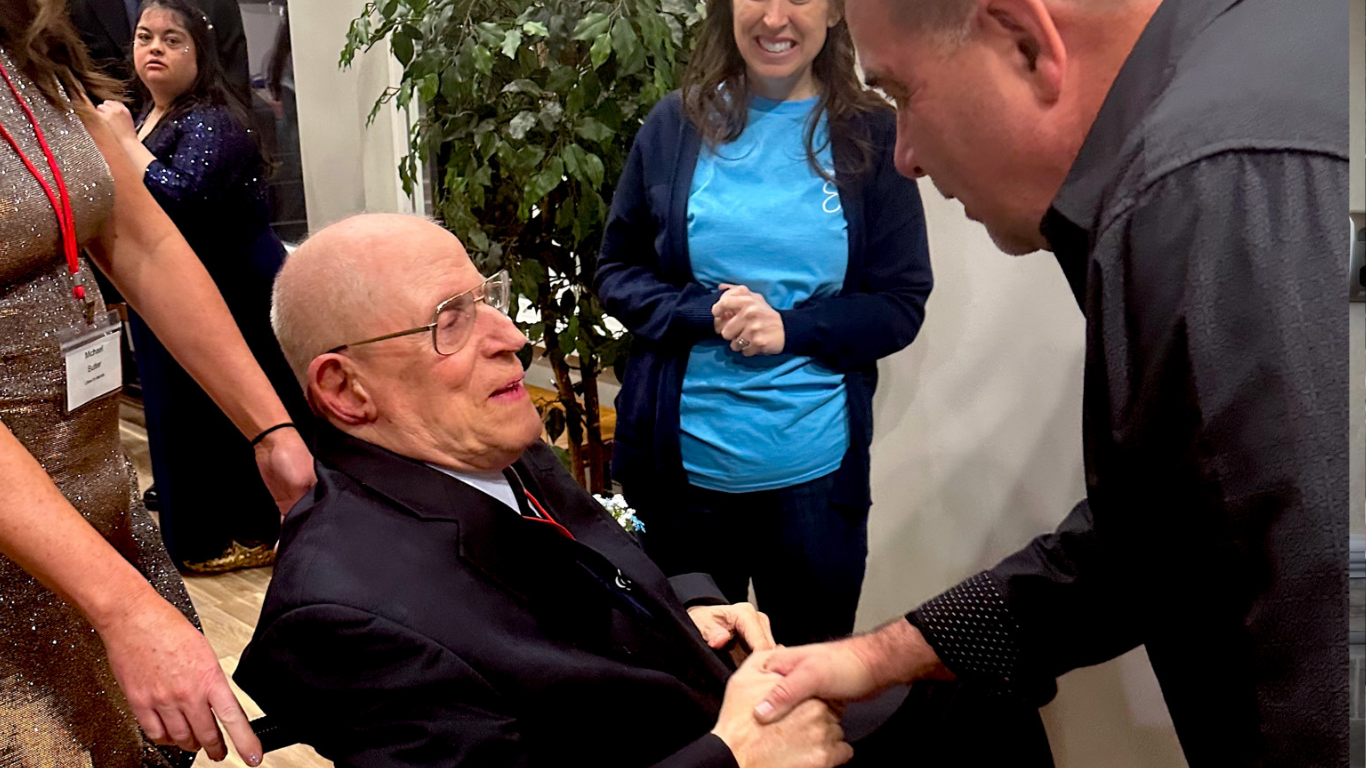
Feature photo: Rick Hancock, the pastor of Emmanuel Church, Huntingtown, greets a 2025 Night to Shine guest