
6 Easy Ways to Make Your Church Accessible Now
By Amber Stewart
Editor’s Note: Your church wants to minister to individuals with disabilities, and perhaps you have a sensory room and buddies, and a class designed for individuals with disabilities, and that’s wonderful! But perhaps some people are still not able to attend because your church is not fully accessible. Amber Stewart wants to help! She has developed some wonderful ideas — many very affordable — to help you take steps to make your church accessible to all.
It is estimated that approximately 253,347 churches exist in America today, and disability advocates hold that only 15–20% of these churches are fully accessible. How about your church? Are you ready to take the next step and make your church more accessible? It’s surprisingly easy.
1. Allow Basic Access
The most basic form of physical accommodation would mean creating ramp access to the sanctuary and widening one doorway. A concrete ramp will cost a minimum of $2,000, and a wooden ramp can cost just over $1,000. But if you don’t care about aesthetics (disabled people don’t!), you can order a portable ramp like this one on Amazon for around $200. They even have a 10-foot-long ramp for $445, and every size in between.
Widening one doorway at a minimum will run you around $750, but I assure you, we’re worth it! Consider removing a chair or two for a disabled attendee or widening the aisle space to accommodate a wheelchair user who may need to sit at the end of a pew.
If God has financially blessed your congregation, you could widen all doorways, add sloping ramps everywhere, and create a fully accessible bathroom with a full-size adult changing table, a tall ADA toilet, grab bars, and a wheelchair-height sink.
For more information on ADA bathroom requirements, read here.
2. Create a “Quiet Zone” and/or a Sensory Room
Every disability is different, but every one still requires accommodations. Creating a “Quiet Zone” and/or a Sensory Room creates a safe space for people with neurodiverse disabilities to go when feeling overwhelmed. Even people with physical disabilities can feel overwhelmed. It’s not easy going out in public when you have no idea how (or if) you’ll be accepted.
Don’t know what to fill your Sensory Room with? Think fidget toys, magnetic blocks, kinetic sand, musical and light-up toys (seriously, how cool are these wall panels?), blankets, and rocker chairs — creating a soothing environment that shows the love of Christ.
Scent-free areas should also be implemented for those with sensitive olfactory senses.
For more information on creating a Quiet Zone and Sensory Room, please read here.
3. Help Your Deaf and Hard-of-Hearing Attendees Feel Included
This can include having a dedicated sign language expert up front who can sign out the entire service, and/or provide closed captions/subtitles so that everyone can read along if they can’t hear.
Coming from someone who, among other things, struggles with hearing from time to time, being able to read along would be a tremendous blessing, but it will require a bit more preparation.
4. Set Aside a Day of Celebration for Individuals and Families Affected by Disability
In July, the BCM/D sponsors “Disability Sunday,” and churches in Maryland/Delaware have special sermons and readings, inviting individuals with disabilities to speak, share announcements, lead the Bible reading, and participate in music.
The United Methodist Church, the Reformed Church in America, and the Assemblies of God have begun a tradition of hosting a Disability Awareness Day, and at the June Southern Baptist Convention (SBC) annual meeting in Dallas, a motion was made to add Disability Sunday to the SBC calendar.
Some churches, like Pleasant View Baptist Church in my hometown of Port Deposit, Maryland, have hosted Tim Tebow’s Night to Shine in recent years, which is a formal night dedicated to making individuals with disabilities feel like royalty.
These events share the pure, selfless love of Jesus with the disabled community, letting us know that we are loved and accepted just as we are. That means more than you’ll ever know.
5. Start a Disability Support Group Ministry
Create a space where people affected by disability and their families and/or caregivers can meet on a weekly or bi-weekly basis and share in each other’s highs and lows.
You can get through anything when you have a friend who understands and is going to God on your behalf, and vice versa.
6. Open Your Hearts
You can have the most accessible church in America, but the most important element is love. Love people and families affected by disability.
Perhaps you feel uncomfortable around these individuals because you are afraid you’ll say the wrong thing. You can begin with a greeting! Say “Hi!”
Once you truly begin to engage, you will find we’re probably more nervous about taking that first step than you. Offer a smile or a hug, and you could change a life.
The Rest is Up to You
I have given you all the tools to make your church more accessible in six easy steps. The rest is up to you. Yes, it will cost money, and it’s going to take some time, patience, and a lot of love for your church to become accessible, but I ask you: can you really put a price on someone’s soul? What is the Kingdom of Heaven worth to you?
Our society is not designed for disabled people, but Jesus came for everyone. He died for the abled and the disabled. The church should be a place where everyone—especially people with disabilities—feels welcomed and loved for who they are.
Your inconvenience brings us freedom. I encourage you to choose accessibility for your church today.
“Therefore receive one another, just as Christ also received us, to the glory of God.” (Romans 15:7 NKJV)
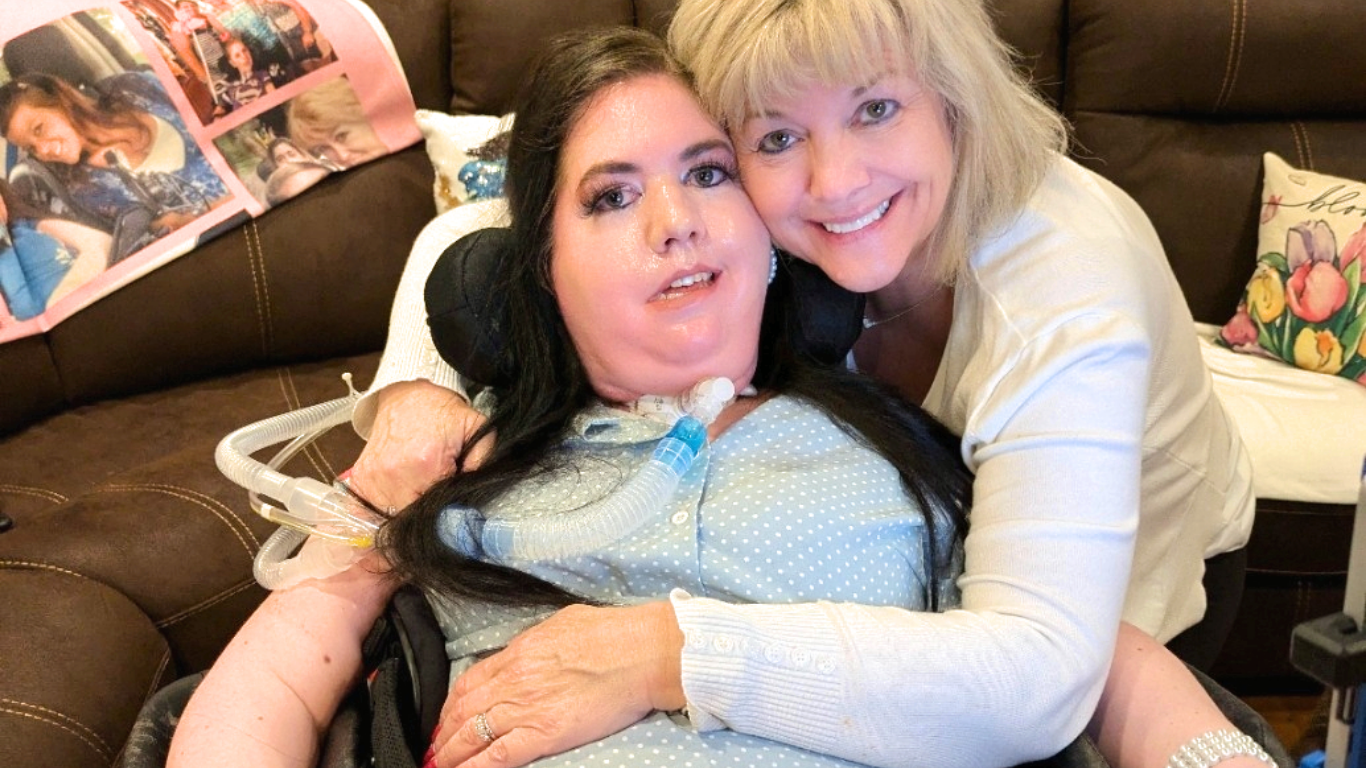
Amber Stewart (Pictured above) is a member of Pleasant View Baptist Church, Port Deposit. She is the author of Broken and Beautiful: The Greatest Beauty Comes from Our Deepest Pain, the blog https://www.brokenandbeautiful.online, and the Sassy Sally and Her Little Dog series.
For more information about making your church more accessible, or if you’d like more information about how the BCM/D can help you start or strengthen a disability ministry in your church, visit https://bcmd.org/everyone-belongs/ or email Disability Missionary Katie Matthews.